Making the Span Possible
The finished bridge is only the final arrangement. Every earlier stage must also have somewhere safe to send its forces.
Design the incomplete structure
A completed bridge may distribute loads across a continuous deck, several supports and a fully connected cable system. Halfway through construction, those relationships may not exist. A projecting segment can behave as a cantilever. A tower may stand without the restraint it will eventually receive. Temporary works solve a real structural problem, not merely a logistical inconvenience.
Balanced-cantilever construction adds segments on opposite sides of a pier in a controlled sequence. Incremental launching advances a deck from an assembly area across successive supports. Large lifts can place prefabricated sections from cranes or vessels. Each method creates different temporary loads and different demands on the site.
The chosen sequence affects the permanent design too. A deck may need to resist bending in places or directions that are most demanding during construction rather than service. Bearings, temporary supports and connection details must suit the route from separate pieces to a working whole.
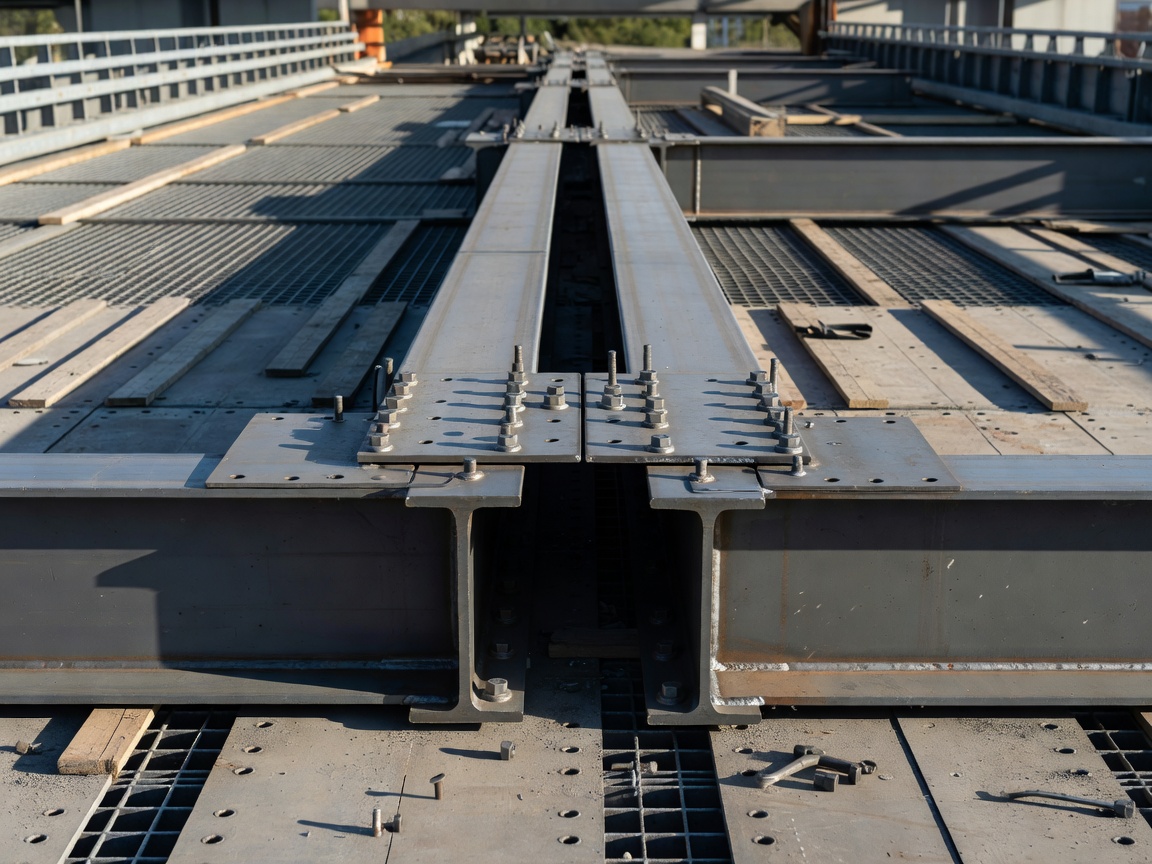
Loads must be checked at each intermediate stage.
Cross the valley without filling it with scaffolding
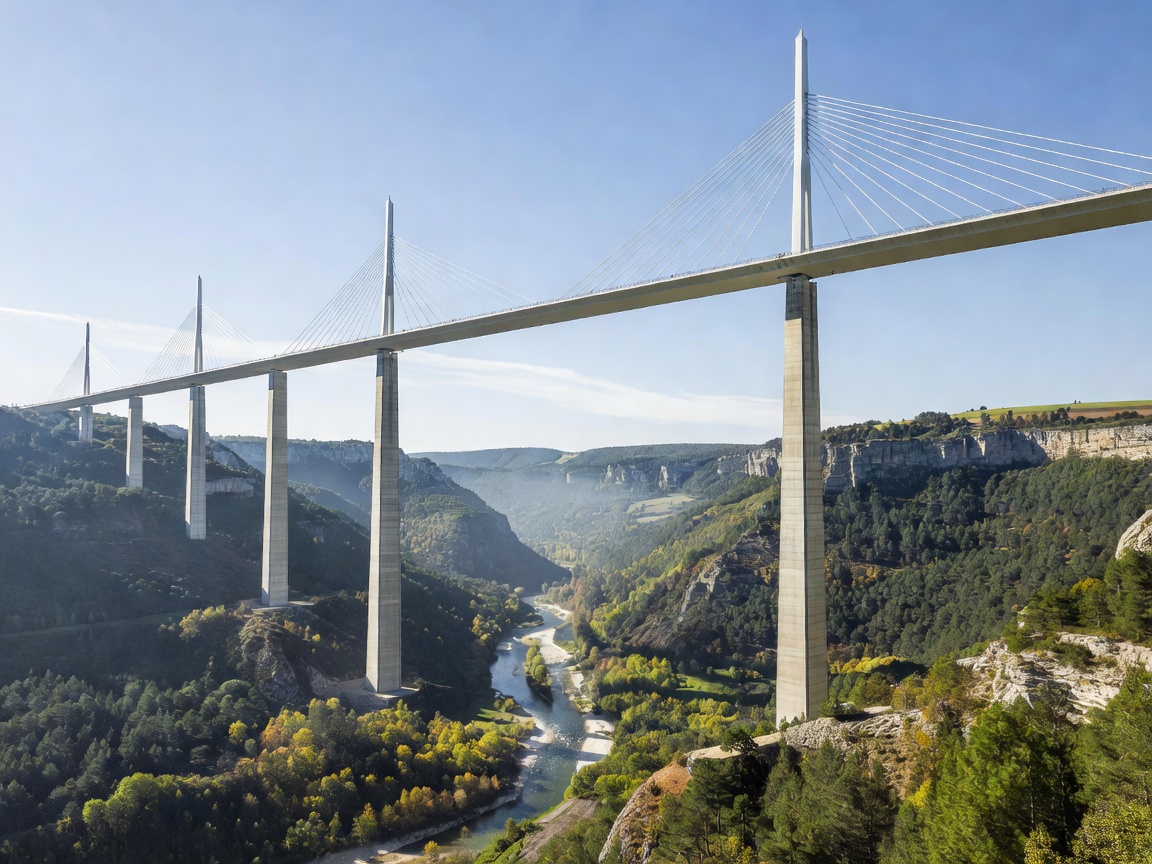
The Millau Viaduct crosses the Tarn valley in southern France. Its slender cable-stayed form is inseparable from the challenge of erecting a long deck high above difficult terrain. The steel deck was launched from the plateaus, using temporary works and carefully controlled movements rather than conventional ground-supported falsework throughout the valley.
Launching changes where the supports sit relative to each part of the advancing deck. As the leading end moves forward, the structure repeatedly encounters new bending and stability conditions. Temporary piers and launching equipment are therefore central to understanding the project, even though they disappear from the finished view.
Millau also illustrates a record-language trap. A structure’s height to the top of a pylon is not the same measurement as the roadway’s clearance above the valley. Both can be interesting, but they answer different questions. A photograph of a very tall pier cannot establish either measurement reliably.
Below water, uncertainty matters
Marine foundations bring together geology, water movement, access and environmental constraints. Engineers investigate the ground, select a foundation arrangement and plan how to build it under the expected conditions. Depending on the site, solutions may involve piles, large foundation units or excavations protected by temporary enclosures.
Scour is another concern: flowing water can remove material around foundations. It is not enough to know how the river bed looks on a calm day. Floods, currents and the presence of the bridge itself can alter local flow. Design, protective measures and inspection all contribute to managing the resulting risk.
The Øresund link between Denmark and Sweden shows that a crossing need not use one structural answer throughout. Its combination of bridge, artificial island and tunnel responds to a route with navigational and nearby airport constraints. The system makes more sense when read as a corridor than when judged only by its most photographed cable-stayed span.
Measure records before repeating them
“Longest bridge” may refer to the whole route, a continuous viaduct, a main span or a particular structural type. “Highest bridge” often concerns the deck above the ground or water below. “Tallest bridge” may concern the structure’s total vertical extent. None is interchangeable with navigation clearance.
Compare two projects only after aligning the definitions. A long viaduct made of many moderate spans does not solve the same problem as one exceptionally long clear span. Both can be remarkable, but counting them in one undifferentiated list hides the engineering.
| Claim | Ask before comparing |
|---|---|
| Longest main span | Which supports define it, which structural category applies, and on what date? |
| Longest crossing | Are approaches, tunnels and separate structures included? |
| Highest deck | What ground or water datum is used beneath the deck? |
| Tallest structure | Where are the bottom and top measurement points? |
The opening day is not the end
Once traffic begins, construction gives way to a long period of operation. Drainage keeps water away from vulnerable details. Protective systems slow corrosion. Bearings and joints accommodate movement but may need replacement. Inspection tracks defects and informs interventions.
Fatigue is especially important where repeated loads affect susceptible details. It differs from a single overload: a large number of stress cycles can matter even when no individual vehicle appears exceptional. The relevant behaviour depends on materials, connection details and the actual loading history.
For a visitor, the most useful habit is to look beyond the headline span. Notice access gantries, drainage outlets, expansion joints and the space around supports. They reveal a bridge designed not merely to stand, but to remain inspectable and repairable. Never enter maintenance spaces or construction areas to get a closer view.